
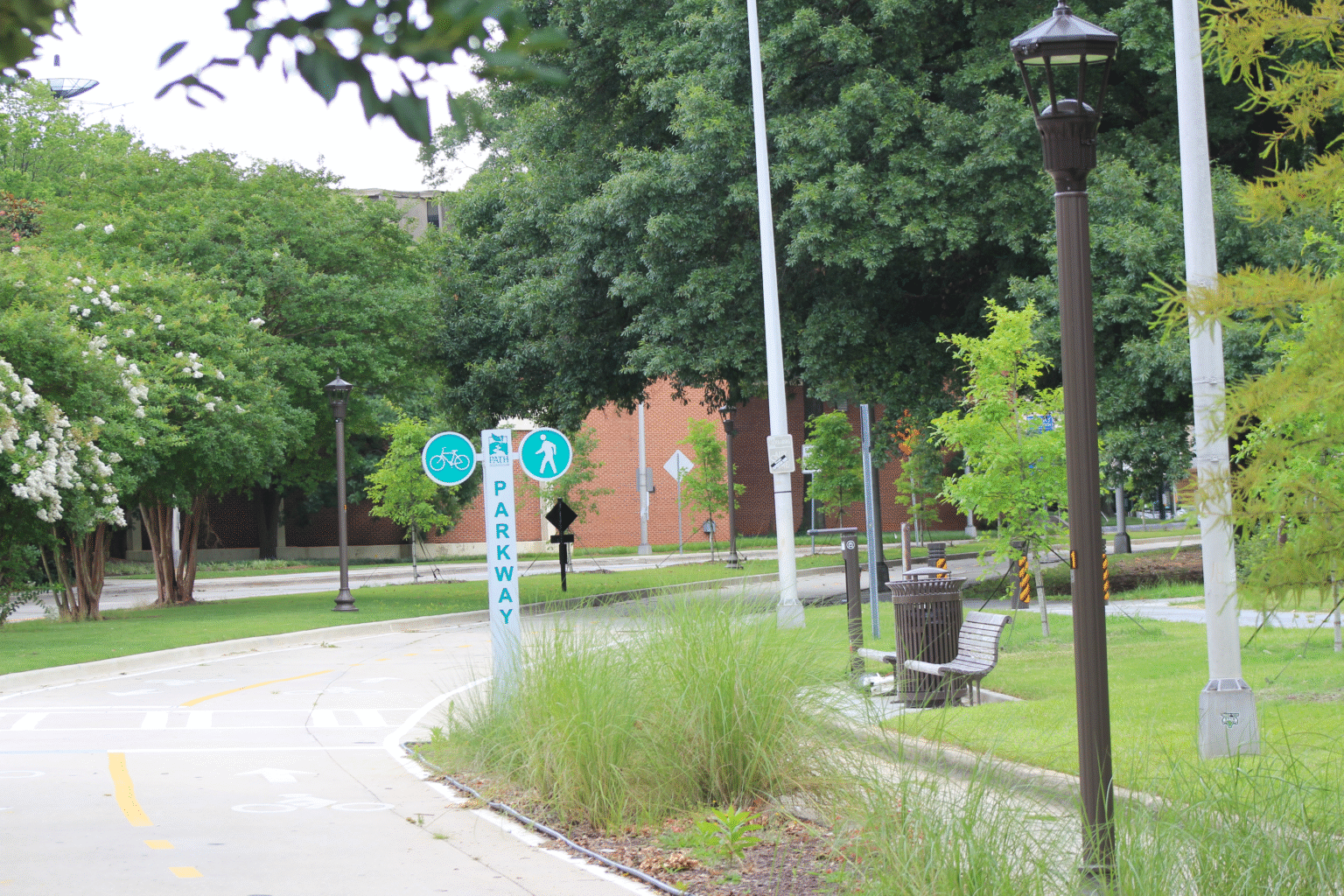
The Dunwoody City Council will decide Monday night (July 13) whether to move forward with developing a Concept Plan for Ashford Center Parkway.
Ashford Center Parkway is an important missing connection in Dunwoody’s growing bicycle and pedestrian network. Completing this connection would help create a continuous route between Dunwoody Village and the Perimeter Center area.
Please attend Monday’s City Council meeting to speak during Public Comment—or email the Mayor and City Council in support of moving the concept planning process forward to: councilmembers@dunwoodyga.gov.
Why This Connection Matters

Like every new path, sidewalk, or bicycle connection, this project would fill another missing “tooth” in Dunwoody’s growing transportation network—making it easier and safer to get from one place to another whether walking, biking, or driving.
Imagine having the option—and the freedom—to ride a bike to work in Perimeter Center, take your bike to the Dunwoody MARTA Station, visit Perimeter Mall, meet friends in Dunwoody Village, or help your child safely ride or walk to school—all without needing to drive for every short trip.
Communities across the country have found that when safe, connected bicycle and pedestrian facilities are built, more people choose to use them. Families feel more comfortable riding together. Children gain safer routes to school. More residents discover they can comfortably walk or bike to nearby destinations.
Every new sidewalk, path, intersection improvement, and bicycle connection strengthens our transportation network, giving people more safe, convenient, and connected ways to get around Dunwoody.
What Is a Concept Plan?
Before any transportation project is built, it moves through several phases of planning, engineering, community input, and design. Monday night’s vote concerns only the first step.
This is the same planning process the City has successfully used for numerous transportation projects, including the Chamblee Dunwoody Road / Womack Road intersection improvement completed in 2023. Major public infrastructure projects don’t begin with construction—they begin by studying the corridor, evaluating options, and engaging the community.
For more examples, checkout the city’s page for current and recently completed public works projects here.
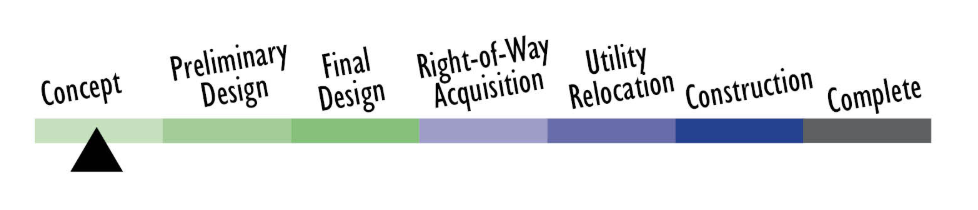
A Concept Plan is where engineers begin studying the corridor and exploring possible solutions.
During this phase they’ll study questions such as:
- What design options are available?
- How would traffic operate?
- How can walking, bicycling, and driving work safely together?
- Are drainage improvements needed?
- Is additional right-of-way required?
- What would the project cost?
- What feedback does the community have?
The goal of this phase is to develop a recommended Concept Plan—not final construction plans.
The consultant will study the corridor, develop alternatives, analyze traffic and safety, gather public input, and prepare a recommended Concept Plan. Before completing the Final Concept Design, the consultant will present the recommended concept to the City Council for review and feedback, then refine the plan based on that input.
The City Council remains involved throughout the project. If it advances beyond the Concept Plan, each major phase would return to the Council for additional review, funding decisions, and opportunities for public input.
What Could This Look Like?
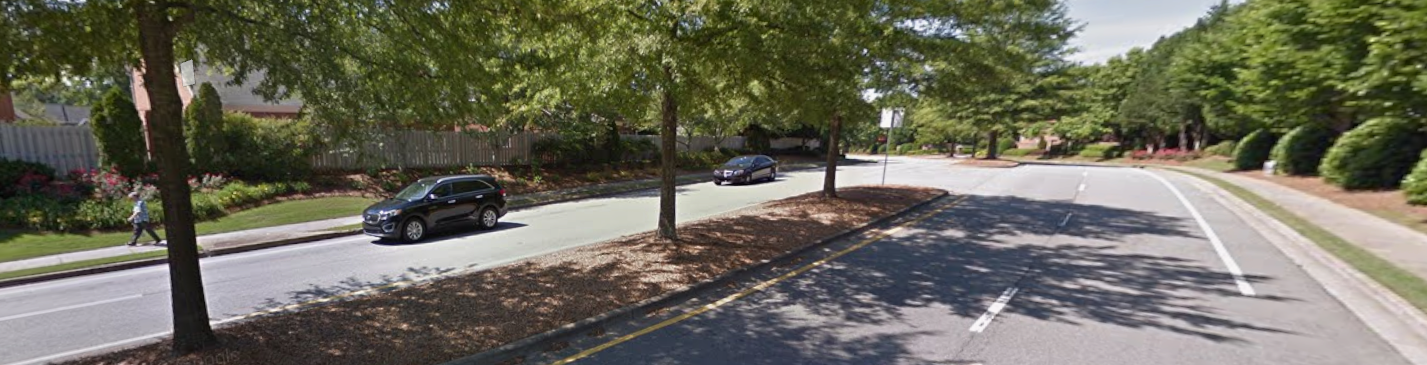
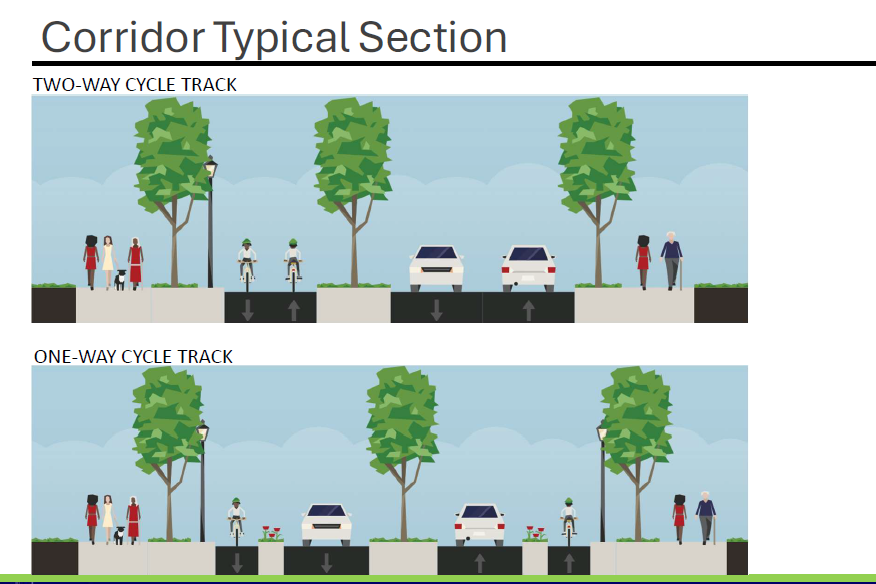
The purpose of the Concept Plan is to explore possible solutions—not to choose one before the engineering is complete.
As part of the Concept Plan, the consultant will evaluate several design elements before recommending a preferred concept.
One concept being studied includes:
- Protected bicycle lanes that are physically separated from vehicle traffic
- Wide sidewalks on both sides
- Pedestrian-scale lighting
- Landscaping
- Drainage improvements
- Enhanced pedestrian crossings
Importantly, the RFP does not prescribe a final design. The consultant will evaluate alternatives and make recommendations based on engineering, traffic analysis, safety, cost, and community input.
Want to see more? View the complete City staff presentation and supporting materials here and here.
A Similar Project
Communities across metro Atlanta are successfully building projects like this to give residents safer, more comfortable places to walk and bike.
The cover photo at the top of this article shows PATH Parkway near Georgia Tech in Atlanta, where a similar four-lane roadway was transformed into a corridor with protected bicycle facilities, sidewalks, landscaping, and pedestrian-scale lighting while maintaining vehicle access.
Every community is different, and the final design for Ashford Center Parkway will be developed through Dunwoody’s concept planning process. The Georgia Tech project provides one real-world example of the kind of high-quality corridor that thoughtful planning, engineering, and community input can produce.
What Happens Next?
If the City Council authorizes the project, the City is expected to enter into a contract with Kimley-Horn, the highest-ranked engineering firm identified through the City’s competitive Request for Proposals process.
Kimley-Horn has partnered with the City of Dunwoody on numerous transportation and planning projects since the City’s early years, including the Georgetown Small Area Plan and the first Dunwoody Village Master Plan. The firm also has senior leaders who live in Dunwoody and bring a strong understanding of our community.
The consultant will:
- Conduct field surveys
- Analyze traffic operations and safety
- Study drainage and stormwater
- Evaluate utilities and right-of-way
- Develop concept alternatives
- Estimate project costs
- Hold public meetings and gather community input
The consultant will then present recommendations to the City Council before any future design decisions are made.
Good planning comes first.
How You Can Help
1. Attend the City Council Meeting
Join us at the Monday, July 13 City Council meeting, and speak during Public Comment. Please arrive by 5:45 p.m. to sign up.
You don’t need to be an engineer or transportation expert. Simply tell the Council why you believe Dunwoody should continue building a safer, more connected transportation network.
2. Email the Mayor and City Council
Send a brief email encouraging them to move the Concept Planning process forward to: councilmembers@dunwoodyga.gov
3. Share This with Friends and Neighbors
Help spread the word by sharing this article with friends, neighbors, and others who care about Dunwoody’s future. The more residents who understand what Monday night’s vote is really about, the stronger the community conversation will be.
Your voice can help shape Dunwoody’s future. We hope you’ll join us in building it.
Want to Learn More?
The City’s Request for Proposal (RFP) provides much more detail than can fit into a single blog post. Download here.
The selected engineering consultant will be responsible for studying the corridor, engaging the public, developing concept alternatives, and preparing a recommended Concept Plan for the City Council’s consideration.
The current project schedule anticipates:
- Public Information Meeting – Winter 2027
- Concept Plan Presentation to City Council – Spring 2027
- Final Concept Design – Summer 2027
As the Concept Plan is developed, the consultant will present the recommended concept to the City Council for review and feedback before completing the Final Concept Design.
After the Concept Plan is complete, the project would return to the City Council for consideration before advancing into future phases.
If ultimately approved and funded, the City’s current planning schedule anticipates:
- Preliminary Engineering — 2026–2027
- Right-of-Way Acquisition — 2027
- Utility Coordination — 2027–2028
- Construction — 2028–2029
As with any capital project, those future phases remain subject to City Council approval, available funding, engineering recommendations, and continued public input.
For readers interested in the technical details, here’s a summary of the consultant’s scope of work. We’ve also included a link to the complete Request for Proposals (RFP).
Summary of the Consultant’s Scope of Work
The engineering consultant will be responsible for developing the Concept Plan and, if the project moves forward, supporting future phases of engineering and design.
Major responsibilities include:
Planning & Engineering
- Develop concept alternatives and roadway layouts
- Traffic analysis and engineering studies
- Bicycle and pedestrian facility design
- Structural engineering
- Geotechnical engineering
- Surveying and utility coordination
- Right-of-way evaluation
- Stormwater, drainage, and hydrology analysis
- Landscape architecture and pedestrian-scale lighting
- Signing, pavement marking, and signal design
- Erosion and sedimentation control
Public Engagement
- Public meetings and stakeholder engagement
- Monthly project team meetings
- Presentations to the City Council
- Meeting summaries and documentation
Project Development
- Preliminary engineering plans
- Right-of-way plans
- Final engineering plans
- Construction cost estimates
- Bid documents
- Construction administration support
The consultant’s work will follow nationally recognized engineering and design standards, including guidance from AASHTO, NACTO, the Americans with Disabilities Act (ADA), the Manual on Uniform Traffic Control Devices (MUTCD), GDOT, and the City of Dunwoody’s transportation design standards.
The goal of this process is simple: to ensure that transportation operations, public safety, engineering, environmental impacts, construction costs, and community feedback are all carefully evaluated before the City Council considers any future decisions about the project.